 Odolog
Motorcycle Maintenance Checklist for Everyday Riders
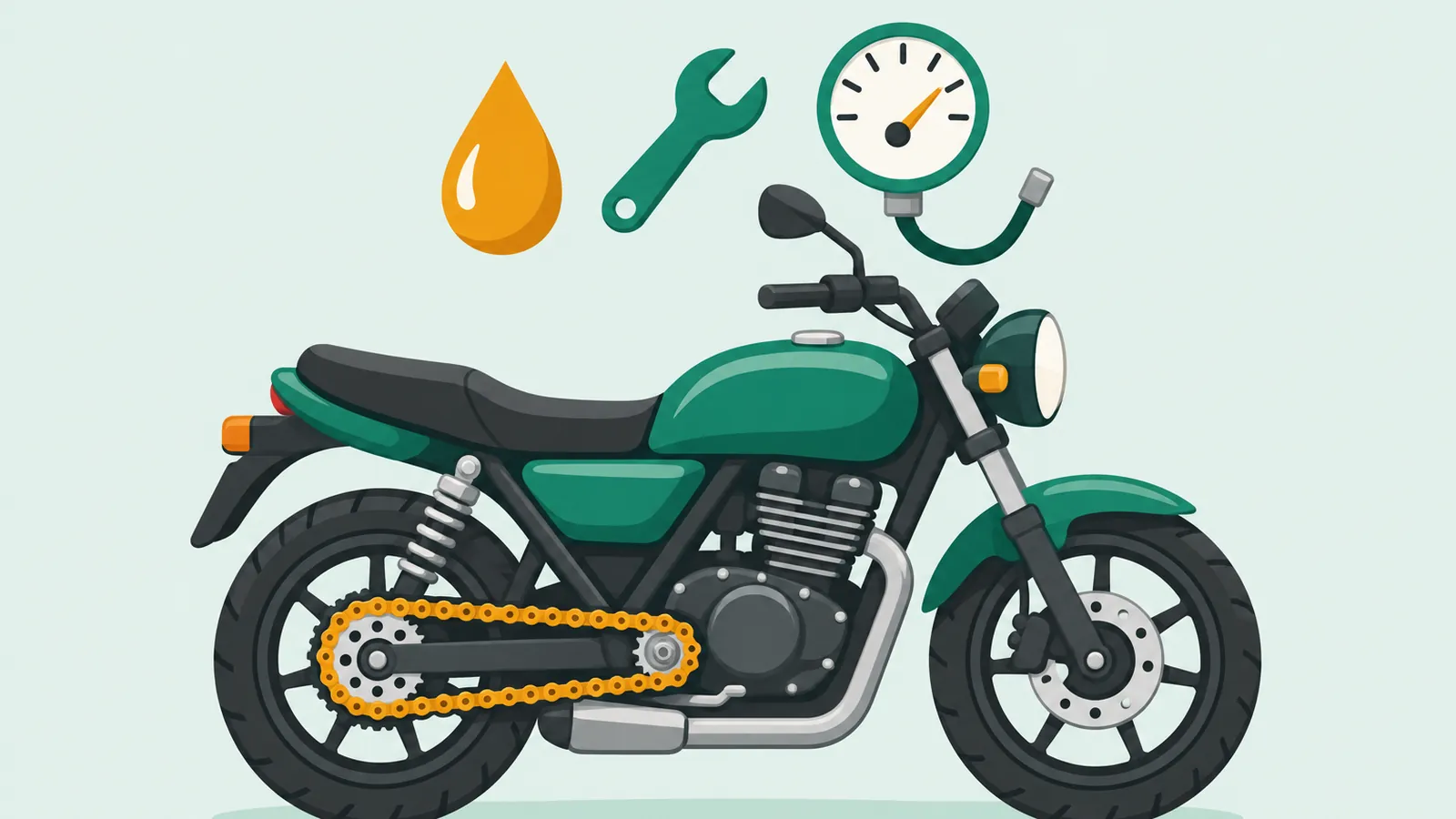
A motorcycle is less forgiving of neglect than a car. A loose chain, a soft tire or tired brake fluid isn't just a cost problem on two wheels; it changes how the bike handles when you need it most. The upside is that most bike maintenance is quick, cheap and easy to do yourself.
This checklist covers what everyday riders, commuters and scooter owners should check, and how often. As always, your owner's manual has the exact intervals and specifications for your bike.
Before every ride: T-CLOCS
The Motorcycle Safety Foundation's T-CLOCS checklist is the standard pre-ride inspection. It takes a couple of minutes once it's a habit:
- T – Tires and wheels: pressure, tread, cuts or embedded objects, wheel bearings and spokes.
- C – Controls: levers, pedals, cables and throttle move smoothly and return properly.
- L – Lights and electrics: headlight, tail light, brake light (front and rear brake), indicators, horn.
- O – Oil and fluids: engine oil level, brake fluid, coolant, and no leaks underneath.
- C – Chassis: suspension, chain or belt tension, nothing loose.
- S – Stands: side stand and centre stand spring back and hold.
You won't do the full list before a two-minute trip to the shop. Do a quick walk-round daily and the full check weekly and before any long ride.
Maintenance schedule at a glance
| Item | Typical interval |
|---|---|
| Tire pressure | Weekly, with tires cold |
| Chain clean and lube | Every 500–600 mi (800–1,000 km), and after riding in rain |
| Chain slack check | Every couple of weeks; adjust to the spec in your manual |
| Engine oil and filter | Per manual; often more frequent than a car |
| Brake pads | Check monthly; replace at the wear line |
| Brake fluid | Every 2 years |
| Coolant (liquid-cooled bikes) | Every 2–3 years or per manual |
| Air filter | Per manual; sooner in dusty conditions |
| Spark plugs | Per manual |
| Valve clearances | Per manual; often the biggest scheduled service |
| Scooter CVT belt and rollers | Per manual; inspect at major services |
Chain care
The drive chain is the job bikes need most often and the one riders most often skip. A dry, dirty or badly adjusted chain wears itself and the sprockets out quickly, wastes power, and in the worst case can come off.
- Clean and lubricate every 500–600 miles (800–1,000 km), and after any ride in the rain. Use a chain cleaner and a soft brush, then apply chain lube to the inside of the chain while turning the rear wheel. Let it sit before riding so it doesn't fling off.
- Check slack at the middle of the lower run. The correct range is in your manual and often on a sticker on the swingarm. Too tight is as bad as too loose: it wears the gearbox output bearing and the chain.
- Replace chain and sprockets together when the chain has stretched beyond adjustment or the sprocket teeth look hooked. A new chain on worn sprockets wears out fast.
Belt-drive and shaft-drive bikes skip most of this, though belts still need tension checks and shafts need their oil changed.
Oil: use motorcycle oil
On most motorcycles, the engine oil also lubricates the gearbox and the clutch (a "wet clutch"). That's harder work than oil does in a car, which is one reason motorcycle oil change intervals are usually shorter.
It's also why you should use oil made for motorcycles, meeting the specification in your manual (often JASO MA or MA2). Many car oils contain friction modifiers that can make a wet clutch slip. Scooters with a separate gearbox may have their own oil specification, and the gear oil needs changing too.
Tires
Bikes are far more sensitive to tire pressure than cars. A few PSI low makes steering heavy and vague and wears the tire unevenly. Check weekly with a decent gauge, cold, against the figures in your manual (often different front and rear, and for riding with a passenger).
Look for squared-off profiles from too much straight-line riding, cracks, and the tread wear indicators. Like car tires, bike tires harden with age, so very old tires with plenty of tread can still be unsafe.
Brakes
Check the pad thickness through the caliper monthly; most pads have a groove or line that shows the wear limit. Check the fluid level in both reservoirs. Brake fluid absorbs moisture, which makes the lever feel spongy when the brakes get hot, so replace it every two years whatever the mileage.
Battery and electrics
Motorcycle batteries are small and drain quickly if the bike isn't ridden, especially with alarms or trackers fitted. If you ride less than weekly, a smart charger (battery tender) connected while parked will greatly extend battery life. Keep terminals clean and tight.
Winter storage
If you lay the bike up for winter:
- Fill the tank and add a fuel stabiliser, then run the engine a few minutes to circulate it
- Change the oil before storage so acidic old oil isn't sitting in the engine
- Clean and lube the chain, and clean the bike so road salt doesn't sit on metal
- Connect a smart charger or remove the battery and charge it indoors
- Put the bike on a stand or move it occasionally so tires don't flat-spot
- Cover it with a breathable cover
Keep a log
Because bike jobs come round so often, it's easy to lose track of when you last did the chain or how many kilometres are on the current tires. A simple log fixes that and builds a service history that helps when you sell.
Odolog works for motorcycles and scooters as well as cars. Set reminders like "chain lube every 800 km" or "brake fluid every 2 years", log fill-ups to watch your fuel economy, and record each service with every item and its cost. Its reminders estimate the due date from how much you ride, so the notification arrives in time even if your mileage varies by season.
New to tracking fuel? Here's how to calculate fuel economy properly, including partial fill-ups.